
When you think of whisky tasting, or even tasting events, you don’t automatically think of Black Dog NQ. You’re much more likely to think of pool, burgers or late night dancing.
But in a space beneath the stairs, there’s a fab hidden little cocktail bar – perfect for events and parties – now host to regular tasting sessions, the most recent of which involved a definite love of mine, whisky.
We kicked off the evening with a mini cocktail, a Blood and Sand, a classic cocktail, while our host Mike Green, introduced himself and his background, and introduced us to the whiskies we were to sample.
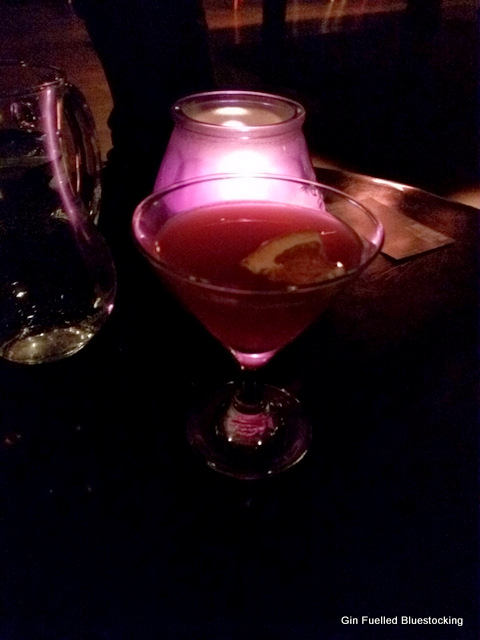
While Mike took the time to talk to us about the making of whisky, the process that takes it from malt, to mash, fermentation to distillation, and into ageing, he began to pour our first whisky, a single malt.
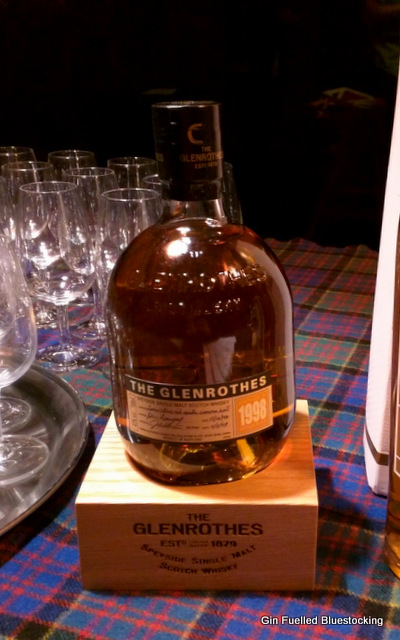
The Glenrothes is from Speyside (the same region I visited with Caorunn), and home to around 40 distilleries, whose whiskies range from light, sweet and floral, to heavier, more complicated whiskies that have been aged in a range of casks. The Glenrothes is only bottled when they believe it has reached peak maturity, when it is released as a ‘Vintage’.
The Glenrothes 1998 was bottled in 2014, and is one of their most prevalent single malts, meaning price wise it’s pretty accessible to you and I. Flavour wise, it maintains a little pepper on the tongue, but has lots of vanilla, golden syrup and apple juice, making it accessible flavour wise too. A great start.
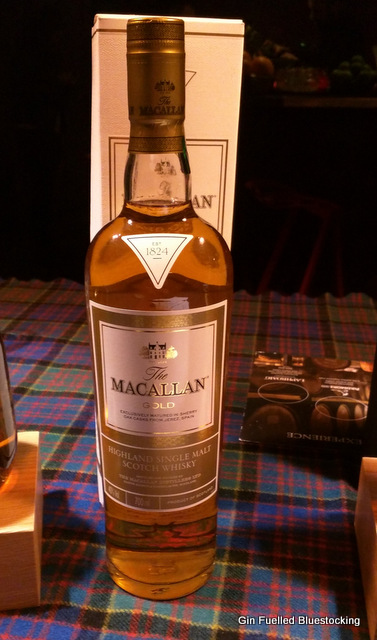
Our second sample was from The Macallan, which took us from a single malt, to a blended whisky, also from Speyside.
It’s taken a little time for people, even myself, to realise that blends can be just as good as single malts. Cheaper blends have given their more refined cousins a bad reputation, but my own personal experiences of blended whiskies from Compass Box, and indeed The Macallan, mean that I’ve completely changed my opinion.
The Macallan Gold is a no-age statement whisky – meaning that their master distiller is more concerned with flavour and colour than with age. This is still a little controversial in the whisky world, with many whisky fanatics disapproving of this form of bottling, but it is gaining momentum and more distilleries are using this categorisation.
The whisky itself is lovely – and speaks for the Macallan’s reputation as the Rolls Royce of whiskies. It’s soft and easy to drink, heavier than The Glenrothes, having been aged in sherry casks, there’s a little vanilla, but much more fruit – citrus, apples, cherries, with a hint of salinity.
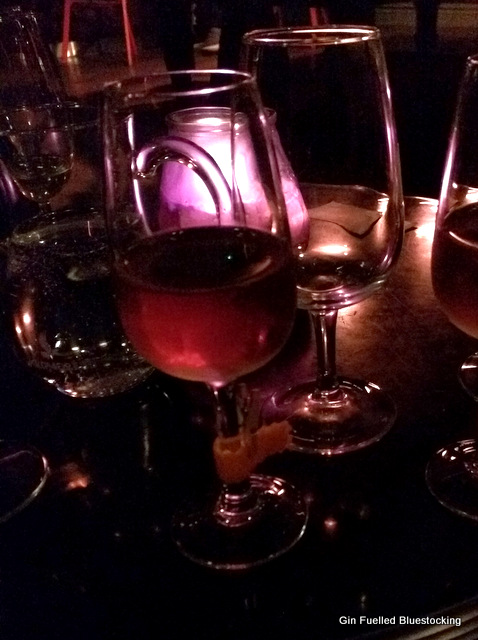
Here we had a little break, a second cocktail, a Rob Roy, a personal favourite, sweet, warming and I love maraschino cherries. We were also treated to some nibbles, to keep us the right side of sober – with asparagus and a blue cheese sauce and fritters, reminiscent of cheese scones, that kept me going back for more.
Suitably refreshed, we moved to some of the heavier flavours on the table.
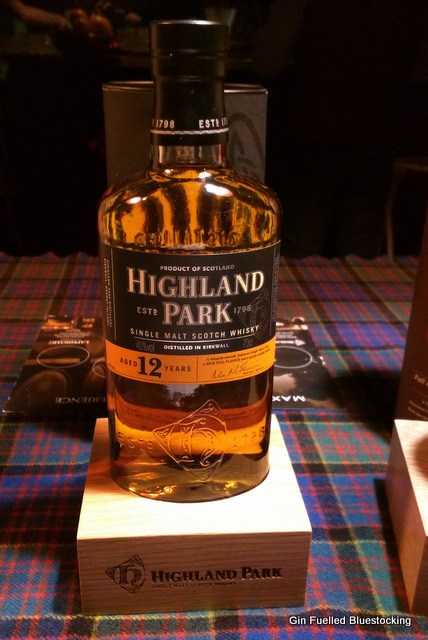
Highland Park was our first step into peated flavours, and one I have to admit, I have at home.
By contrast, Highland Park is made in Orkney, making it Scotland’s most northerly distillery and giving their whiskies a distinctive saltiness. It’s a woody, salty, smoky whisky, with a good level of sweet honey and floral notes.
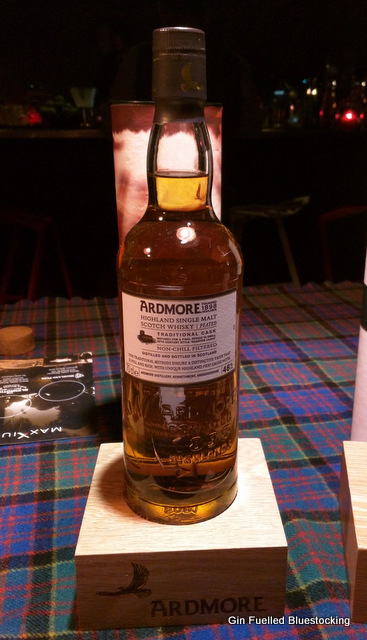
Onto our penultimate whisky, the Ardmore Traditional Cask is the first single malt released from the Ardmore distillery, but unlike it’s previously sampled Speyside cousins, we were again in peated whisky territory.
Smoky and sweet, it has a an almost TCP flavour to it, a hint of bourbon and vanilla, and finishes with another hint of smoke. A few drops of water make it a little softer and even some of those who’d found the peat a little powerful, found this made it more to their palates.
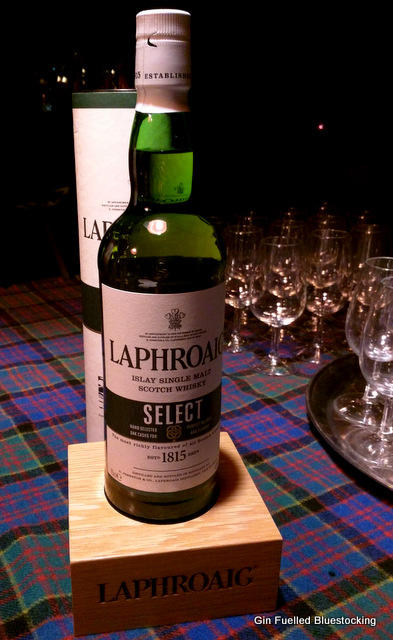
Our final whisky, is definitely for the peat lovers. Laphroaig is well known for it’s peaty flavours, though the Select is definitely it’s most accessible whisky.
Laphroaig distillery is based in Islay, the west of Scotland, and is largely composed of peat, making its whiskies peaty in flavour – earthy and smoky – it’s pure water and rich land meaning it’s perfect for whisky making, from grain to distillation.
The Laphroaig Select is much softer than you’d expect – there’s much more on the nose, than there is on the palate, it’s softened by citrus and apple, having been aged in a variety of casks from sherry to bourbon, there are layers of flavour to play with and sample.
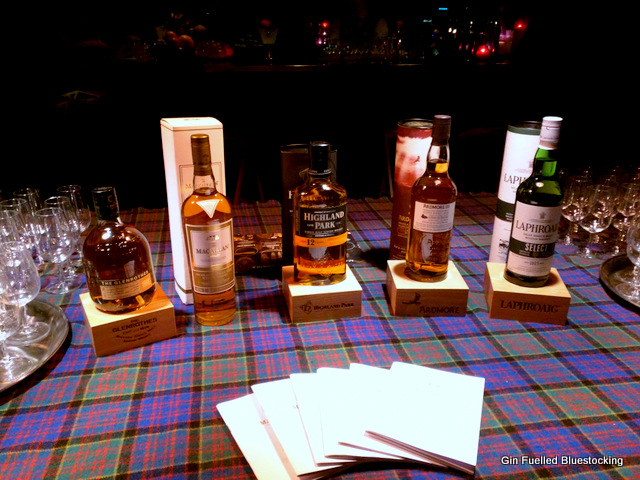
There are lots of tastings planned, and rumour has it, at the bargain price of £5 (for a limited period only) these events are an absolute bargain.
Maybe see you at the next one?