Think wine, and yeah, Japan is not the first place that comes to mind. And it’s probably not the third, fourth of fifth. You’d be far more likely to consider somewhere in Europe, America, or even our own back yard before Japan.
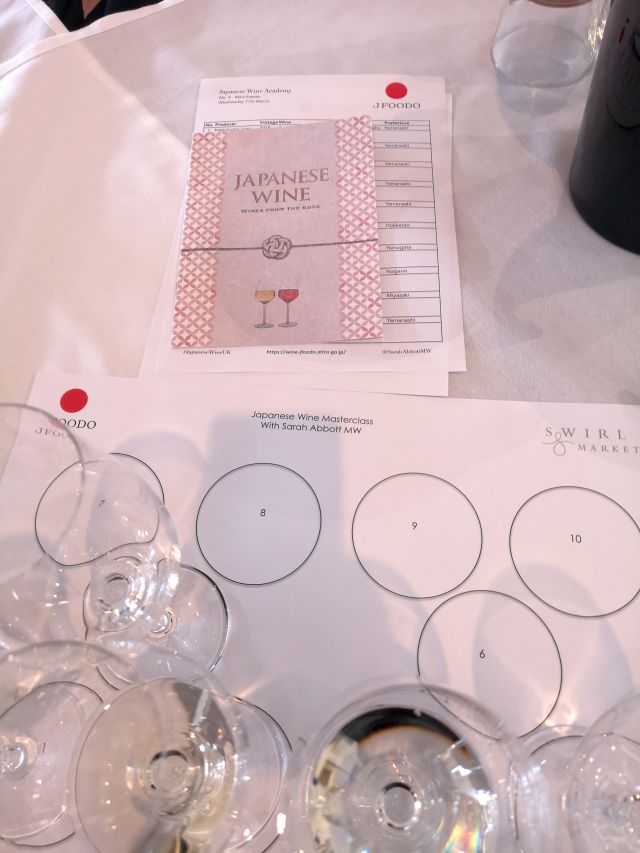
This is perhaps why this tasting led by Sarah from Swirl caught my eye. Not only is Sarah lovely and enthusiastic about the unusual wines she brings into the UK, she’s also incredibly knowledgeable. And held on a sunny Monday afternoon in Manchester, it was the perfect reason to take the afternoon off work.
I don’t think that my curiosity was piqued just because we don’t hear much about Japanese wines, but also because if you know anything about the country, it’s size would seem to preclude it – and it’s climate. One half of the country has it’s back towards Russia – not exactly known for it’s temperate climate. Add in mountains and monsoons, and it’s certainly challenging.
But not impossible. For a start, Japan has it’s own grape variety, Koshu. Koshu has been shown to have genetics that are a combination of a native grape and one from Georgia (around 1000 years ago), so there is definite history there, though it’s more commonly thought that wine production itself came into being when the Portuguese visited and brought their own wine with them as gifts.

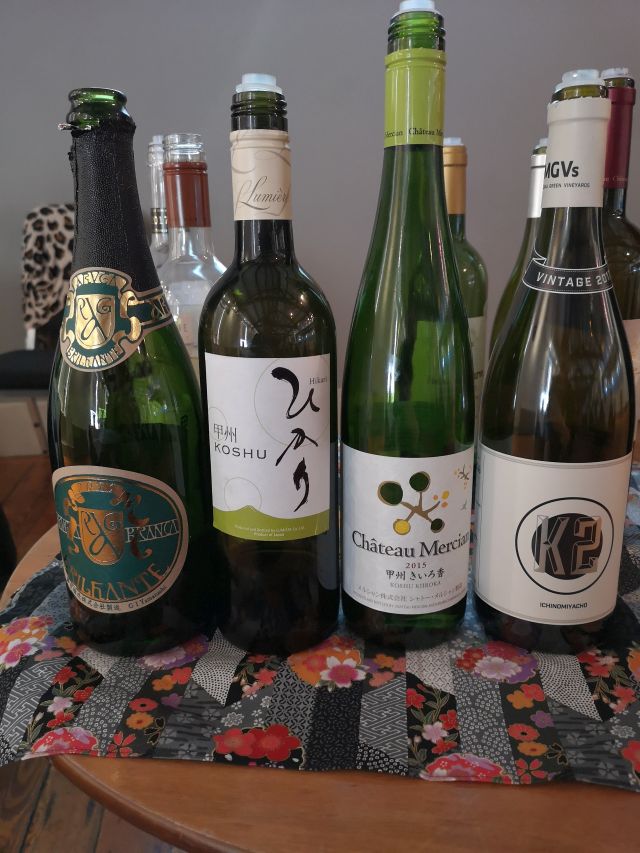
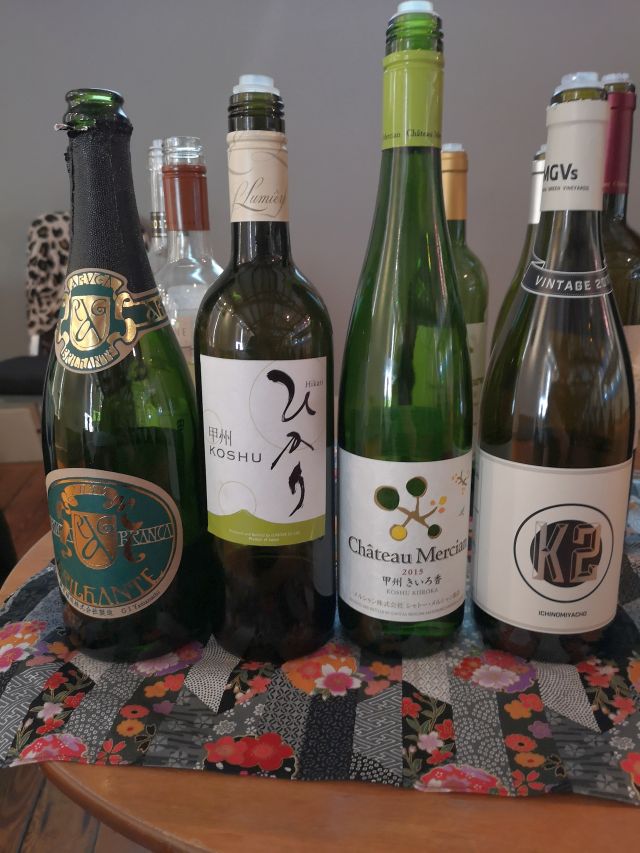
And it’s this Portuguese connection that’s key to the first wine we sampled, Arugabranca Brilhante 2015 Sparkling Koshu from the Katsunuma Jozo winery. The winery has been in existence since 1937, set up in collaboration with Portuguese silk merchants, hence the distinctive name.
On the nose it has lots of citrus, a little of the distinctive, almost ricey notes that Koshu can have, and a little funky note. In the mouth it hits the back of the palate, bitter pear flavours, with a soft fizz.
Onto our second, and our second Koshu, this the Hikari Koshu 2015 from Lumiere. Another older winery, this one has roots dating back to 1885, and is one that you’re probably most likely to come across in the UK. It has a softer nose than the Arugabranca, and a hint of warmth. On the palate, it’s soft, slightly nutty, with florals and pear, and a nice clean finish.
Koshu Kiroka 2015, from Mercian. Mercian in it’s present form began in 1970, but the winery dates back to 1877. Mercian work with the University of Bordeaux, and this wine in particular is a development in association with the University and Dr Takatoshi Tominaga, resulting in a Koshu very different to those experienced so far. Light nose, gently funky. The palate is sharp, peary, hints of yuzu and melon. Has a little funk sitting at the back. Delicious.
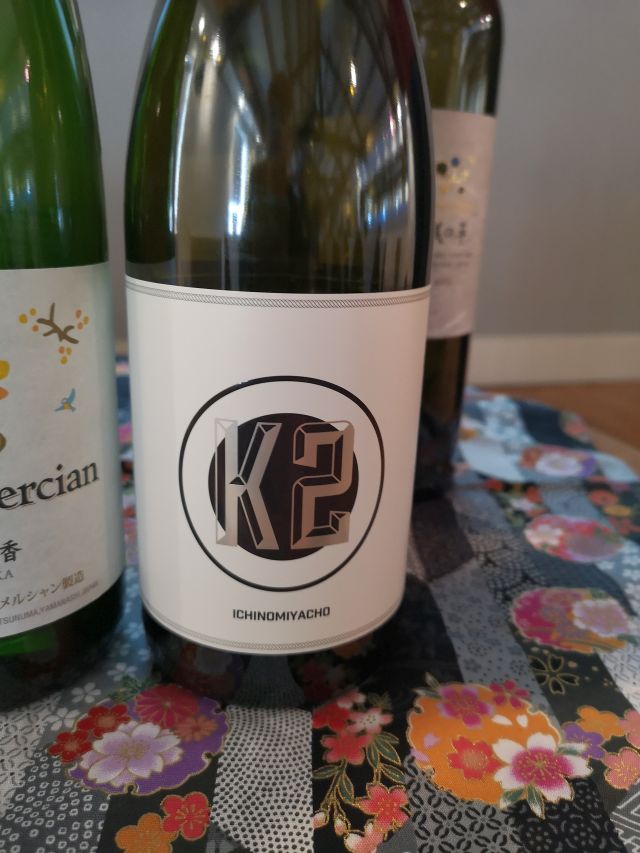
K216 Ichinomiyacho Koshu 2017 from MGV. Funky, deeper than the others, richer. Big hit of vanilla – so much so I can almost feel the grains between my teeth, then a good acidity that cuts through. Possibly my favourite of the tasting.
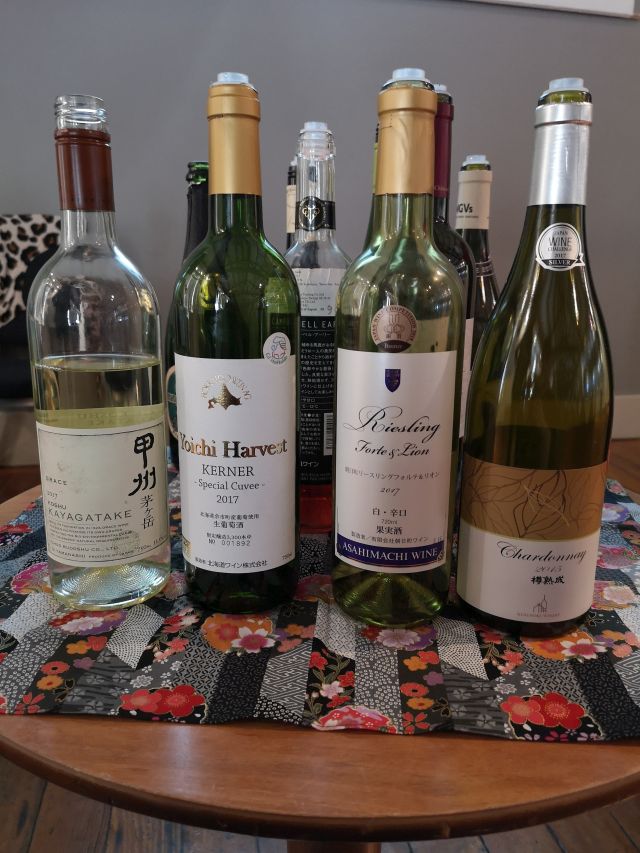
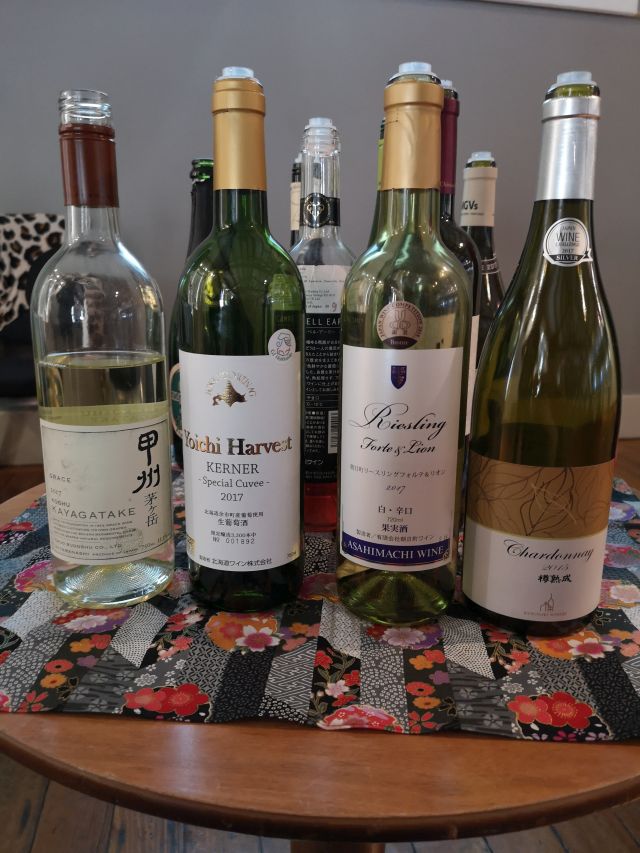
Kayagatake Koshu 2017 from Grace. Soft pear, hints of green pepper and fruit. Very delicate and elegant compared to the other Koshu wines.

Onto non Koshu wines, beginning with the Yoichi Harvest Kerner 2017 from Hokkaido Wine. This winery is a co-operative and was set up in collaboration with Germany in 1974. They showcase their fruit-growing heroes and in this case we get Mr Tazaki’s Sauvignon. Immediately reminds me of R Whites Lemonade. Sweet, juicy and soft, with a similarity to Ice Wine with that deep orchard fruit sweetness.
Our next was a Riesling Forte & Lion 2016 from Asahimachi Wine. Initial notes of peardrops and elderflower. It’s not sweet, but there are lots of pretty florals, with a good acidity, and a gentle nuttiness.
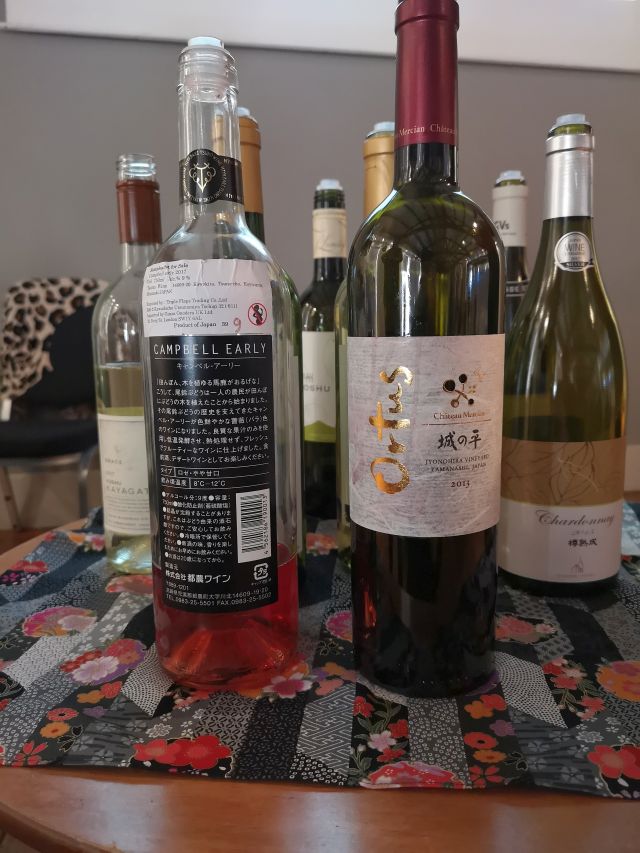
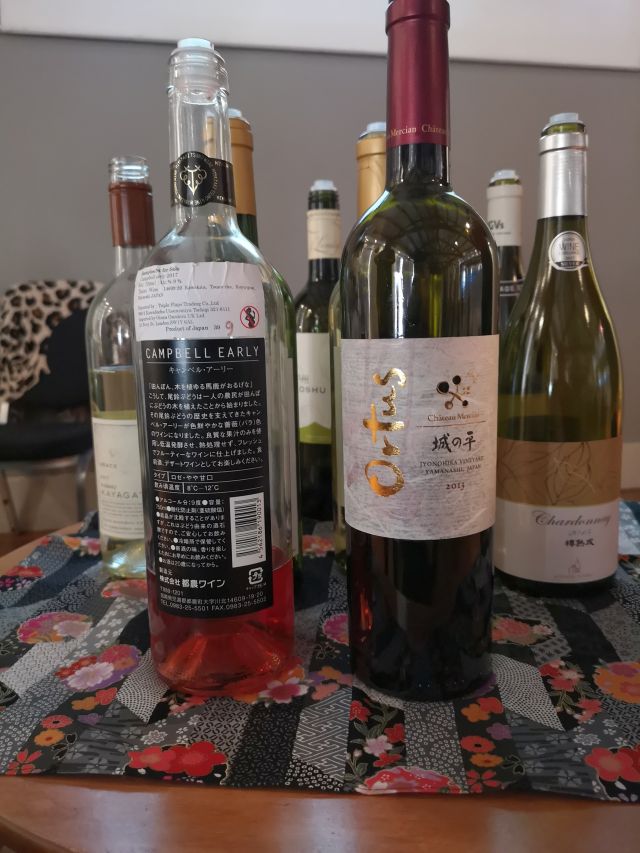
Next the Chardonnay 2015 from Kusunoki Winery. This winery produces more recognisable varieties, such as Merlot and Chardonnay. This is an old school Chardonnay. Oaky, buttery, vanilla. Layers of salinity and sweetness. It’s just lovely.
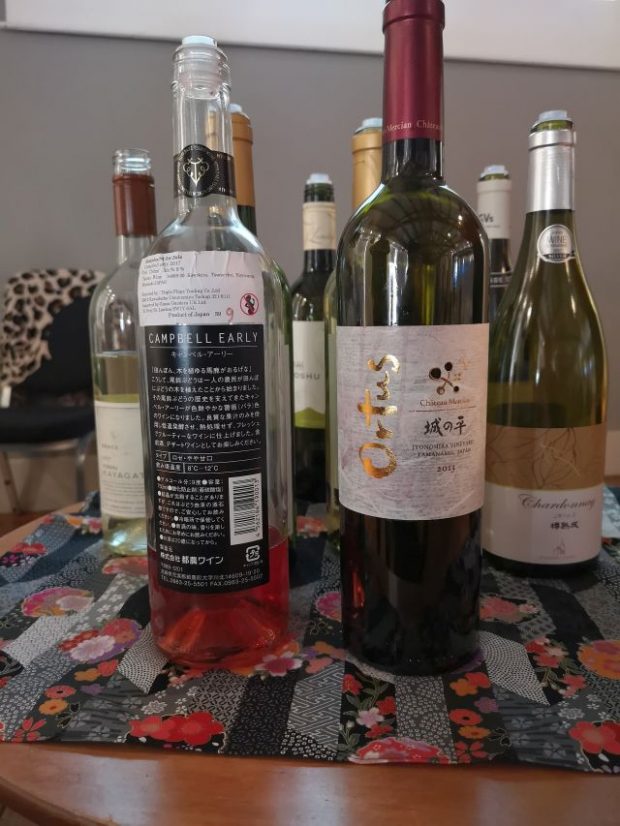
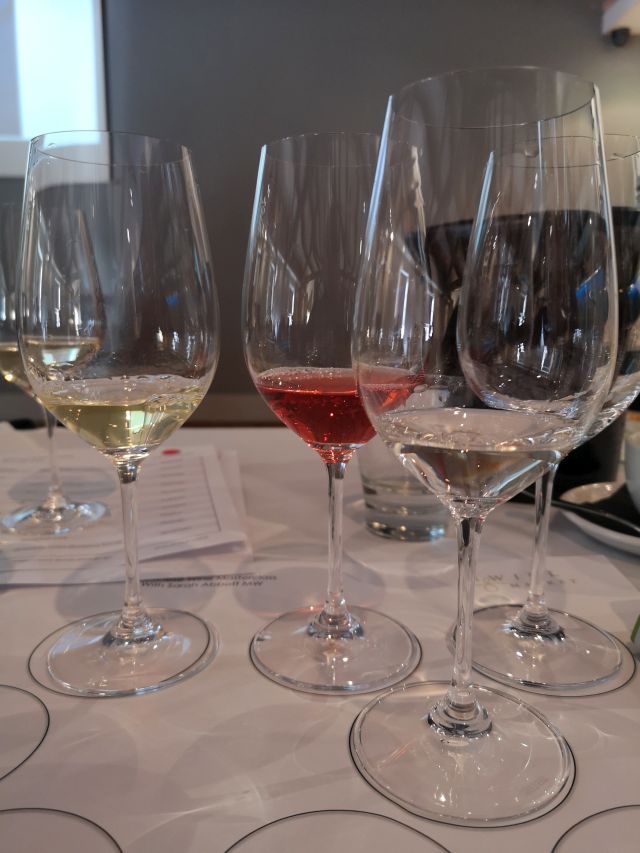
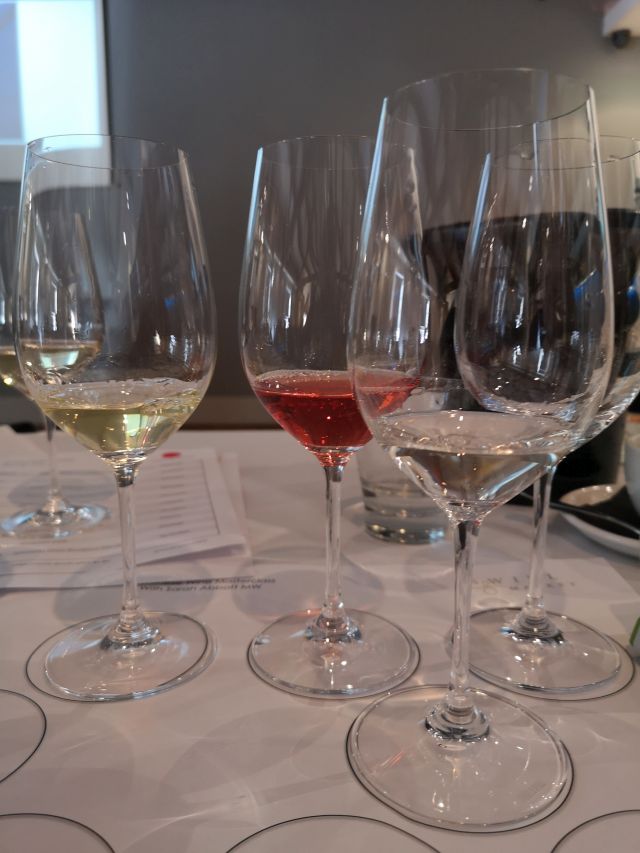
Our penultimate wine moved us away from whites – the Campbell Early 2017, Tsuno Wine. This soft sweet rose immediately reminds me of Strawberry Haribo. Sweet and fruity, but not sickly sweet. Not my usual kind of wine, but I did rather enjoy this.
And finally, Jyonohira Ortus (Bordeaux blend) 2013 from Chateaux Mercian. Our only red of the tasting, this had a good vanilla hit, but with green herbal notes, lovely and layered. Could sip for quite some time and pick up something different every sip.
Sarah’s tasting led us through more traditional wines, to those created with a blend of science and artistry, and each one brought something new to the table. Who knew Japanese wines had so much to offer?