

Most of us know vermouth as a cocktail ingredient. The softener in a Martini, sweetener in a Martinez. Maybe you think of the big brands you used to spot left in your parents’ booze cabinet, Martini Rosso, or the Joan Collins’ advertised Cinzano.
Cin cin darling.
I’ll admit, I’m more likely to go for a G&T or even a T(equila) & T, than a V&T. Most styles of vermouth for me are involved in cocktails. Negronis, Martinis, Gibsons. Occasionally I’ll skip it altogether and revert to my favourite Noel Coward quote. “A perfect martini should be made by filling a glass with gin, then waving it in the general direction of Italy”.
Maybe that’s because I’ve not met the right one, or ones. Because as of this review, I’m a bit of a convert.

Agora is an English Vermouth with it’s roots in Sussex. The creation of Arthur Voulgaris, he started on his own vermouth journey whilst working in Australia, and was introduced to a negroni. Fast forward to a stint in New York City, and he watched the market grow and change. He found himself seeking out new styles, and flavour profiles. And now, in his new home of Sussex, he’s working with a local wine producer to create his own.
So… What is vermouth? It’s a fortified wine, and as with many alcoholic drinks, including gin, began as a medicine. It began life as ‘Hippocratic wine’ – wine fortified with herbs and aromatics. Thanks to Italian cafe culture it moved from a medicine into a drink for pleasure, no doubt aided by the purported digestive aid offered by it’s infused ingredients.
Now, we enjoy it for what it is. And in the case of Agora, it’s a blend of French Merlot and Cabernet Sauvignon grapes infused with botanicals including wormwood (specifically artemisia absinthium), cassia, vanilla, lavender, rose petals, black pepper, dark morello cherries, and mandarin and star anise. The process to create each batch is extensive.
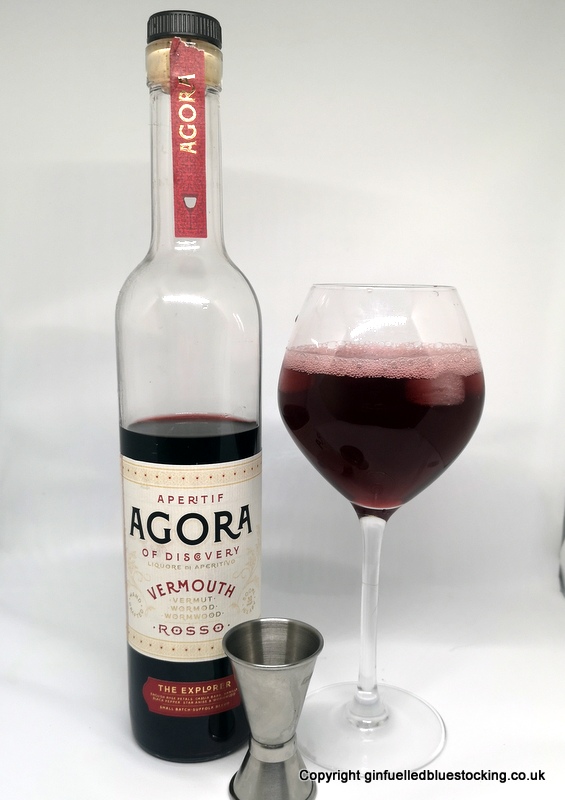
Each is botanical is infused separately for two weeks, before being blended together in different quantities. This blend is then transferred to a stainless steel tank, to rest for a week, before the grape must is added to the tank, and rested for a further month. Finally, there is a further infusion with rose, cassia bark, star anise and lavender for a week for extra depth of flavour and aroma.
The result? It’s bloody gorgeous.
First on the nose comes the rose, lavender and cherry. I could sit with my nose in the glass for ages. The cherry carries through onto the palate and then the rich spices kick in. You’d expect a certain element of bitterness with vermouth, and this is no different, but it’s been so well done, it’s distinctly moreish, meaning I’ve drunk a lot of this bottle already. Oops.
In cocktails it works well – I was desperate not to overwhelm the rose and lavender notes that I adore, and was relieved to discover that they’re still there in both a V&T, and in a negroni. No mean feat.

But I must admit, I’m more likely to drink it neat, with a little ice – as the ice melts, different elements of the vermouth come out to play. It’s delightful.
Arthur has plans to adjust this initial vermouth – to use grapes local to Suffolk (Acolon and Rondo), and in time create a white vermouth, using Madeleine Angevine from two or three local vineyards. All of this means that the vermouths created will be almost entirely British, bar those botanicals that simply don’t grow here.
I admit, I’m really looking forward to trying the white vermouth, but for now need to find a local stockist. I have a feeling the rest of this bottle isn’t going to last long…