
My skin woes continue. Exacerbated (my, that’s a big word for this time of day) by a bug that completely knocked me off my feet last week. Gastric flu. Boys and girls, if you have this bug cancel everything, stay at home, in bed, sleep, drink fluid and watch rubbish telly. It’s the only way to cope. Oh, and not pass it on to anyone else, because they don’t want it either.
So, my already dry skin has been suffering the whole lack of food, lack of fluid, lack of sunlight thing and I’ve reverted back to using these bottles that I was reviewing before I got sick.
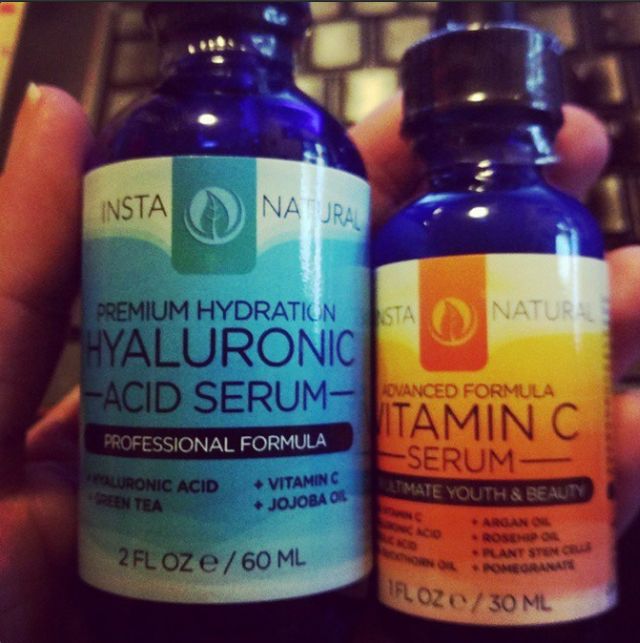
Following my foray into fixing your skin internally – not a resounding success, though the vitamins are very useful and good for your tummy – I went back to topical applications, with both the Vitamin C and Hyaluronic Acid Serums.
Let’s start with the Hyaluronic Acid Serum first. It’s currently on sale via Amazon for £13.99 and comes in a quite substantial 60ml bottle. It’s dispensed via pipette – which feels a little unnecessary, but the geek in me rather likes it.
It’s a clear, fairly watery texture, that the skin absorbs fairly quickly – I’ve been using it as a pre-bedtime application, as part of my normal routine. 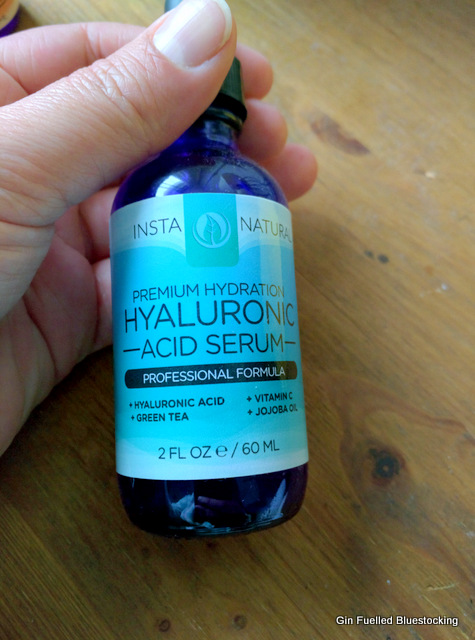
Ingredients wise, it’s the most simple of the two, with only the acid, jojoba oil, green tea and vitamin C listed as the active ingredients. Now for a smidge of science.
Hyaluronic acid is shown, via repeat applications, to offer a plumping effect to the skin, so for those of use with fine lines and dry skin, it’s great. It pulls moisture in (unless you’re in a very dry climate, in which case it will pull moisture from the skin), so can make lines appear less prominent. There’s also a tiny bit of evidence (journal paper here if you want more science) to suggest that it may help in collagen production.
Jojoba oil, is a great moisturiser, which again helps those of us with dry skin and fine lines, and smells nice, so bonus.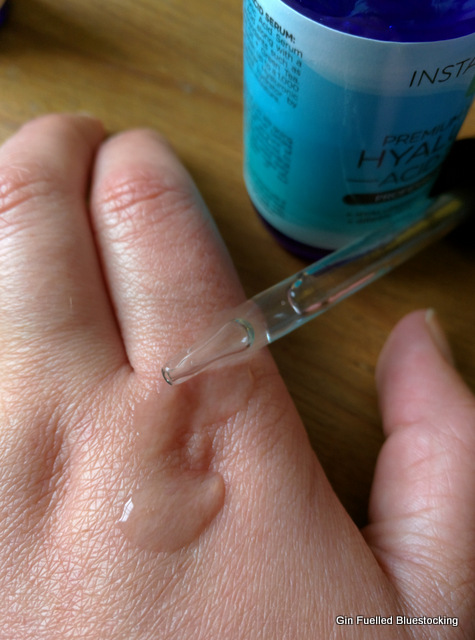
Vitamin C, has been shown to help reduce oxidative stress. As a quick breakdown – as oxygen breathing/utilising beings we use oxygen to produce energy. As part of this process we produce reactive molecules known as free radicals, it’s a natural process, we can’t escape it. Other sources of these are pollution, sunlight, smoking etc – those a little more preventable.
These free radicals can damage the body and have an impact on the ageing process. Our bodies naturally produce anti-oxidants to help prevent this damage (which is why a healthy diet with lots of fruit and vegetables to helps source these are useful), but we can also find these in topical applications. Hence the vitamin C.
Finally, green tea can help slow down the development of some signs of ageing, and has an anti-inflammatory effect – so can help reduce redness.
Onto the Vitamin C Serum. This is slightly more expensive, at £15.95 for a 30ml bottle. Again, it comes with a pipette for dispensing, and has a slightly thicker consistency to the HA Serum and a very different colour.
This absorbs well too, though the smell reminds me a little of the orange vitamin C tablets my mum used to make me take as a child (I’m pretty sure I didn’t need them). Again, I apply this before bed. Vitamin C can react on your skin in sunlight, as so I’d definitely suggest keeping this one for use at home.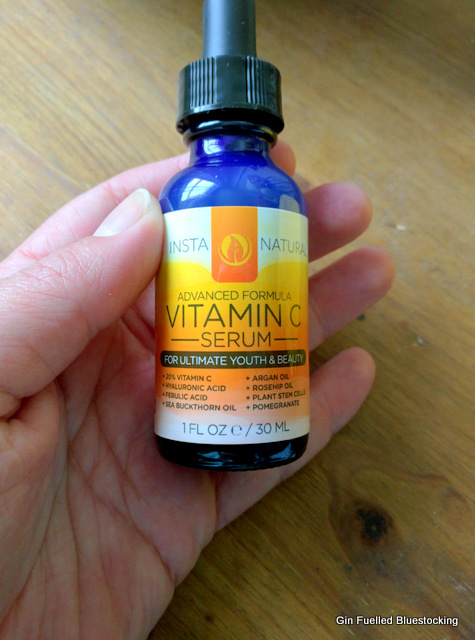
As well as a high dose of Vitamin C (20%), and hyaluronic acid, as above, this contains a variety of other ingredients said to aid with skin health.
Argan oil, is well known for it’s moisturising properties – not just for your hair, and also again, smells rather nice.
Ferulic acid is reactive towards free radicals, and in topical applications has been shown to work in conjuction with vitamins C and E to reduce oxidative stress.
Sea buckthorn oil has long been used for hair and skin, treating everything from sunburn to acne and dry skin, perfect for moisturising and reducing fine lines.
Rosehip oil, again has long been used for skin applications, as it’s high in vitamin C and vitamin A, the latter known for its anti-ageing effects and it’s ability to help repair sun damage.
Plant stem cells have been shown to promote healthy cells and again protect against sun damage.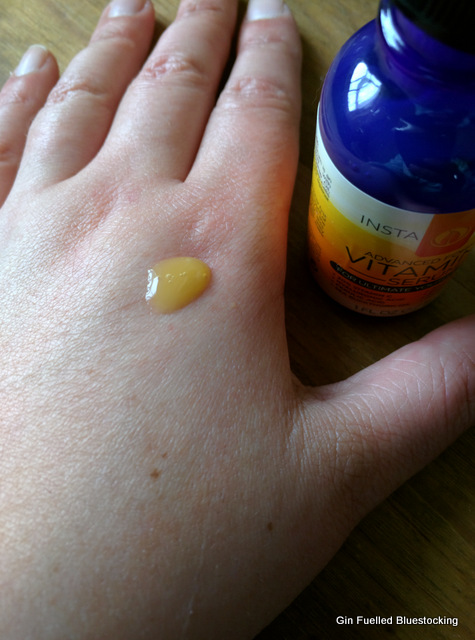
Finally, pomegranate also has an effect against sun damage and free radicals.
Phew. Right, so all these ingredients look great. I looked into the science a bit (and tired out my poor brain), and generally, all of these claims seems pretty valid. Yes, in some cases the claims are still in their infancy, the research is still going on and some of them are more likely to moisturise your skin and offer a reduction in lines in this way rather than having any anti-oxidant effect, but we’re also still learning about anti-oxidants and their actions on our bodies.
So, do they work? Is my skin suddenly awesome and am I looking like my 19 year old self rather than 30 something?
Yeah, they’re not miracle workers, but, there is a difference. The HA serum sinks in and does make my skin feel softer and lines are softer. The vitamin C serum sinks in slightly slower, but after alternating these a couple of times a week, for a few weeks, I think I can see a difference.

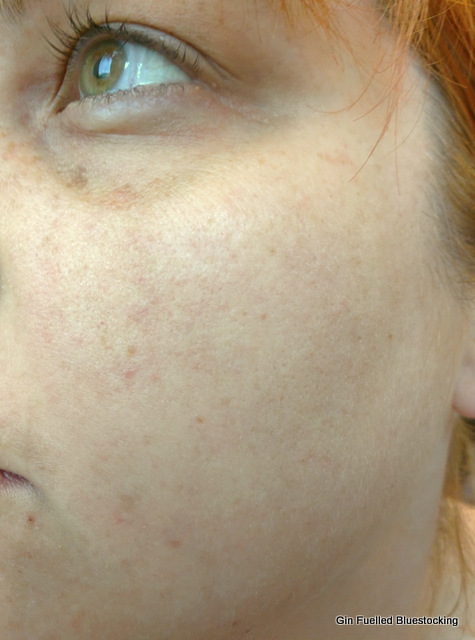
At application, my skin was a little overly pink, and a little blotchy after finishing the round of Beauty & Go drinks.
After, lines are softer around my mouth especially, the redness eased right down quickly and the condition was much better. Less dry, less flaky, more, well, normal.
Maybe it’s just the repeated application. Maybe it’s the oils and their moisturising properties. But, after a bout of illness that’s reduced my skin yet again to a dry flaky mess, I’m using those two bottles again.